
Immunohistochemistry Kits and Reagents


Biotium Complement C4d(C4D204), CF594 conjugate, 0.1mg/mL
This MAb is specific to Complement 4d (C4d) and it reacts with the secreted as well as cell-bound C4d. C4d is a degradation product of the activated complement factor C4b. Complement 4b is typically activated by binding of Abs to specific target molecules. Following activation and degradation of the C4 molecule, thio-ester groups are exposed, which allow transient, covalent binding of the degradation product Complement 4d to endothelial cell surfaces and extracellular matrix components of vascular basement membranes near the sites of C4 activation. The presence of C4d in peritubular capillaries is a key indicator for acute humoral (i.e. antibody-mediated) rejection of kidney, heart, pancreas and lung allografts. As an established marker of antibody-mediated acute renal allograft rejection and its proclivity for endothelium, this component can be detected in peritubular capillaries in chronic renal allograft rejection as well as hyperacute rejection, acute vascular rejection,

Biotium CD45RO(UCHL-1), CF594 conjugate, 0.1mg/mL
Recognizes a 180-185 kDa protein, identified as isoform of leukocyte common antigen (CD45RO) (4th Leucocyte Typing Workshop: Code No. N31). The epitope recognized by this antibody is sensitive to neuraminidase digestion. This antibody reacts with mature activated T-cells, most thymocytes, and a sub-population of resting T-cells within both CD4 and CD8 subsets. It shows no reactivity with normal B or natural killer cells, but reacts with granulocytes and monocytes. Reportedly, it is useful to identify T-cell lymphomas and leukemias. It rarely stains NK cells or B-cell lymphomas.Primary antibodies are available purified, or with a selection of fluorescent CF Dyes and other labels. CF Dyes offer exceptional brightness and photostability. Note: Conjugates of blue fluorescent dyes like CF405S and CF405M are not recommended for detecting low abundance targets, because blue dyes have lower fluorescence and can give higher non-specific background than other dye colors.
Biotium HIF1α(HIF1A-84), CF594 conjugate, 0.1mg/mL
HIF1 (hypoxia-inducible factor 1), a heterodimeric transcription factor complex central to cellular response to hypoxia, consists of two subunits (HIF-1 alpha and HIF-1 beta) which are basic helix-loop-helix proteins of the PAS (Per, ARNT, Sim) family. Expression of HIF-1 alpha protein is regulated by cellular oxygen level alterations as well as in oxygen-independent manner via different cytokines (through the PI3K-AKT-mTOR pathway), growth factors, oncogenic activation, or loss of tumor suppressor function etc. In normoxic cells, HIF-1 alpha is proline hydroxylated leading to a conformational change that promotes its binding to the VLH (von Hippel Lindau) protein E3 ligase complex; ubiquitination and followed by rapid proteasomal degradation. Hypoxia as well as chemical hydroxylase inhibitors (desferrioxamine, cobalt etc.) inhibit HIF-1 alpha degradation and lead to its accumulation in the cells, whereas, contrastingly, HIF-1 beta/ARNT (AhR nuclear translocator) remains stab
Biotium CD6(3F7B5), CF594 conjugate, 0.1mg/mL
CD6 is a type I transmembrane glycoprotein that contains a 24-amino acid signal sequence, three extracellular scavenger receptor cysteine-rich (SRCR) domains, a membrane-spanning domain and a 44-amino acid cytoplasmic domain. The CD6 glycoprotein is tyrosine phosphorylated during TCR-mediated T cell activation. CD6 shows significant homology to CD5. CD6 is present on mature thymocytes, peripheral T cells and a subset of B cells. Antibodies to CD6 are used to deplete T cells from bone marrow transplants to prevent graft versus host disease.Primary antibodies are available purified, or with a selection of fluorescent CF Dyes and other labels. CF Dyes offer exceptional brightness and photostability. Note: Conjugates of blue fluorescent dyes like CF405S and CF405M are not recommended for detecting low abundance targets, because blue dyes have lower fluorescence and can give higher non-specific background than other dye colors.
Cell Biolabs Inc Free Glycerol Assay Kit (Colorimetric), 100 assays
Cell Biolabs' Free Glycerol Assay Kit is a simple colorimetric assay that quantitatively measures the amount of glycerol in plasma or serum in a 96-well microtiter plate format. The kit measures free, endogenous glycerol by a coupled enzymatic reaction system. The glycerol is phosphorylated and oxidized, producing hydrogen peroxide which reacts with the kit’s Colorimetric Probe (absorbance maxima of 570 nm). Each kit provides sufficient reagents to perform up to 100 assays, including blanks, glycerol standards and unknown samples. The kit contains a glycerol standard and has a detection sensitivity limit of ~5 µM (0.046 mg/dL).

Enzo Life Sciences PATHOGENE HPV type probe (6 ml)
A mixture of biotin-labeled HPV 6 and HPV 11-specific probes for . HPV type 6/11 probe is a mixture of biotin-labeled HPV 6 and HPV 11-specific probes in buffered formamide and hybridization enhancers. Use/Stability: Stable for at least one year after receipt when stored as recommended. Shipping: Blue Ice Not Frozen. Long Term Storage: +4°C

Leica Biosystems Bond Polymer Refine Red Detection
BOND Polymer Refine Red Detection is an IVD labeled red detection system for the automated BOND system.BOND Polymer Refine Red Detection is biotin-free, utilizing alkaline phosphatase (AP)-linked compact polymers to provide enhanced tissue penetration and unsurpassed reagent sensitivity.It contains post primary, polymer reagent, Fast Red chromogen, and hematoxylin counterstain and is supplied in a convenient, ready-to-use format.


Bioassay Systems EnzyChrom™ Ketone Body Assay Kit. For quantitative determination of ketone body (acetoacetate and 3-hydroxybutyrate) and evaluation of drug effects on its metabolism.
For quantitative determination of ketone body (acetoacetate and 3-hydroxybutyrate) and evaluation of drug effects on its metabolism. Key Features: Sensitive and accurate. Uses 10 µL sample. Linear detection range of 0.12 to 8 mM for each ketone body in 96-well plate assay. Convenient. The procedure involves adding a single working reagent, and reading the optical density at room temperature. High-throughput. Can be automated as a high-throughput 96-well plate assay for many samples per day. Method: OD340nm. Samples: Serum, plasma, urine etc. Species: All. Procedure: Assay takes 30 min. Kit size: 200 tests. Detection limit: 0.12 mM.

Bioassay Systems QuantiChrom™ Alkaline Phosphatase Assay Kit. For quantitative determination of alkaline phosphatase (ALP) activity using stable p-nitrophenol phosphate substrate.
For quantitative determination of alkaline phosphatase (ALP) activity using stable p-nitrophenol phosphate substrate. Key Features: High sensitivity and wide linear range. Use 5 µL serum or plasma sample. The detection limit is 2 U/L, linear up to 800 U/L. Homogeneous and simple procedure. Simple "mix-and-measure" procedure allows reliable quantitation of ALP activity within 5 minutes. Robust and amenable to HTS. All reagents are compatible with high-throughput liquid handling instruments. Method: OD405nm. Samples: Serum, plasma etc. Species: All. Procedure: Assay takes 4 min. Kit size: 250 tests. Detection limit: 2 U/L.

Abcam DoubleStain IHC Kit: G&Rt on human/mouse tissue (BCIP & AEC), 18ML
The DoubleStain IHC kit (ab183281) is designed to be used with user supplied goat and rat primary antibodies to detect two distinct antigens on human or mouse tissue or cell samples.
The product is subject to the following: Abcam Restricted Use Statement
Cayman Chemical LIpId HydropRoxIDLPO As 100dtn
Quantification of lipid peroxidation is essential to assess the role of oxidative injury in pathophysiological disorders. Lipid peroxidation results in the formation of highly reactive, unstable hydroperoxides of both saturated and unsaturated lipids. Cayman’s Lipid Hydroperoxide Assay measures the hydroperoxides utilizing the redox reactions with ferrous ions. An EAsy to use quantitative extraction method is used to extract lipid hydroperoxides into chloroform and then the extract is used directly in the assay. This procedure eliminates any interference caused by H2O2 or endogenous ferric ions in the sample and provides a sensitive, reliable assay for lipid peroxidation. This kit is designed for use with either a single-tube spectrophotometer or with a 96-well microplate reader. The microplate reader requires a reusable glass plate that is supplied with the LPO Assay Kit (96 well) (Item No. 705003). The range of the assay is 0.25-5 nmol hydroperoxide per tube.
MilliporeSigma INASES PHOSPHATASES P38 SAPK
Drug Discovery & Development,Kinases & Phosphatases,p38/SAPK2 Inhibitor (SB 203580)
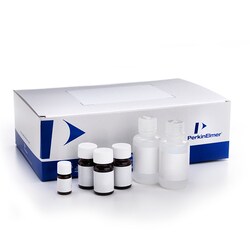
Revvity Health Sciences Inc ATPlite Luminescence Assay System 96-well, 300 Assay Points
ATPlite Luminescence Assay System 96-well, 300 Assay Points
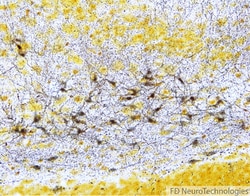
Fd Neurotechnologies Inc FD NEURO SILVER KIT
For 150 sections. Kit contents: Solution A 250 ml Solution B 250 ml Solution C 250 ml x 2 Solution D 250 ml Solution E 1 ml Solution F 2 ml Solution G (5X) 500 ml Glass Specimen Retriever 2 Natural hair paintbrush 1 User Manual 1